

Energy security at the center of the ffirst day of the Financial Times “Energy Transition Summit”
Leading representatives of governments, energy companies, and international organizations discussed the challenges and prospects of the energy transition amid geopolitical uncertainty.
The Financial Times’ flagship “Energy Transition Summit” returned to Athens for a second consecutive year, in collaboration with Kathimerini. On the first day of the conference, held at the Four Seasons Astir Palace Hotel, government officials, institutional representatives, heads of international organizations, investors, and senior executives from the global energy market gathered to discuss developments in the energy sector at a time when geopolitical balances and energy priorities are shifting rapidly.
“The freedom of navigation through the Strait of Hormuz must be fully restored, because an extremely dangerous precedent is being created,” stressed Prime Minister Kyriakos Mitsotakis during his discussion with Financial Times journalist Ben Hall. He also noted that the current developments in the Strait of Hormuz are yet another indication that Europe must take energy security far more seriously. “We have a climate policy; I am not sure we have an energy security policy. And unfortunately, the two do not always go hand in hand,” he added.
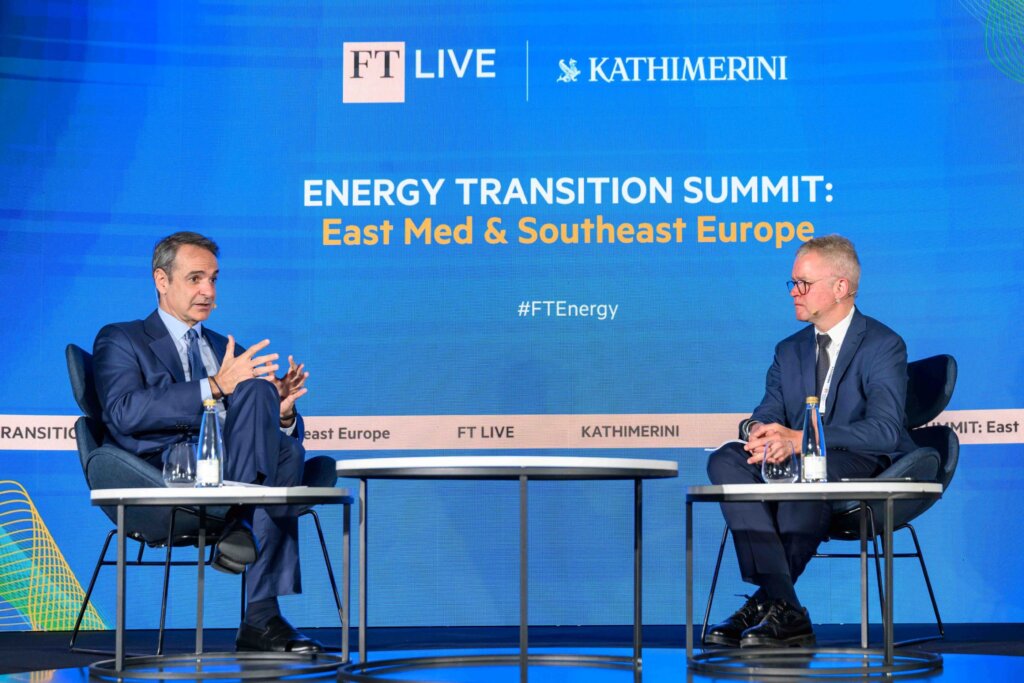
The Prime Minister stated that Greece is fully self-sufficient in terms of fuel supplies, including aviation fuel. “We are major exporters of petroleum products. We have excellent refineries,” he noted, adding that he strongly believes in the green transition and that, once climate neutrality is achieved, a major step forward will also have been made in terms of energy security.
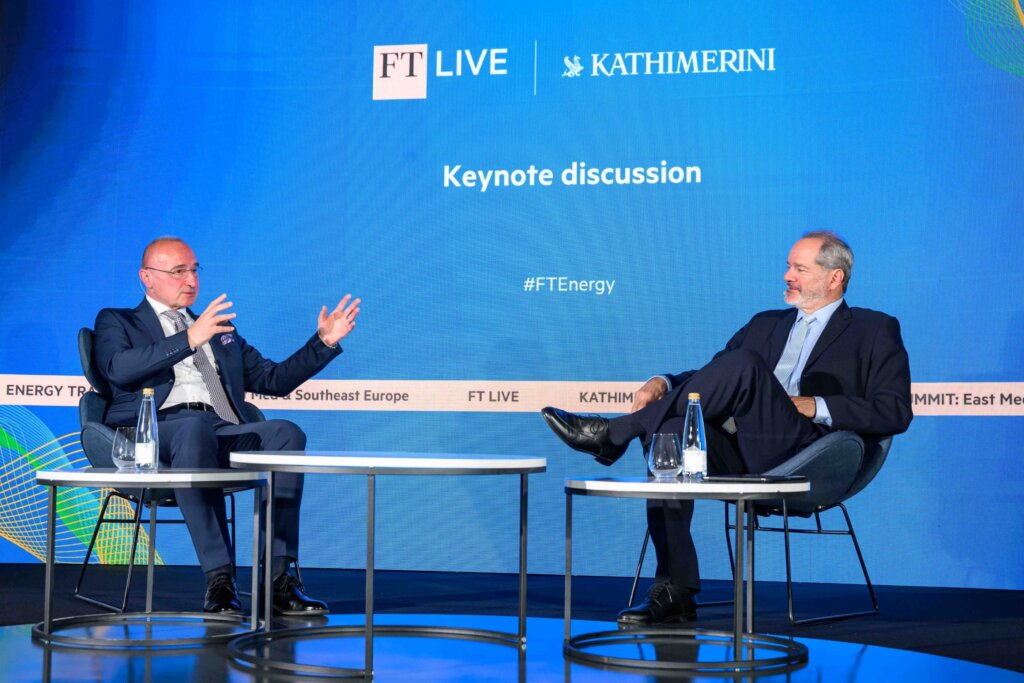
“Croatia has become an energy hub,” emphasized Croatia’s Minister of Foreign and European Affairs, Gordan Grlić Radman, during his discussion with the Director of Kathimerini English Edition, Athanasios Ellis. “As an EU member state, the country seeks independence from Russian natural gas and oil. The Liquefied Natural Gas (LNG) terminal that has been operational since 2021 is a good example. It is not only a Croatian project, but a European one,” he said. “In the EU, we want energy security and policy as soon as possible. There is a high degree of dependence. We need to reduce reliance on external suppliers and develop storage facilities. Croatia, through JANAF, is not merely an alternative route; it is a genuine energy corridor.”
The Chairman of METLEN, Evangelos Mytilineos, expressed the view that the energy transition is gaining new momentum, this time driven by different causes. He underlined the need to develop energy storage solutions, voiced his disagreement with the EU’s decision to ban imports of Russian natural gas, and warned of a risk of rising prices next winter.
“The transition to clean forms of energy is not evolving linearly, but in ‘waves’. The new wave of the energy transition is no longer primarily about decarbonization; it is mainly about energy supply security,” he stated, adding: “Successive geopolitical crises — from Ukraine to the Persian Gulf — have demonstrated that dependence on expensive and unstable energy imports has become a strategic risk for economies and societies. That is why the renewed push for renewables, grids, and storage is not solely about the climate agenda. It concerns economic resilience, price stability, and each country’s ability to maintain control over its energy adequacy.”
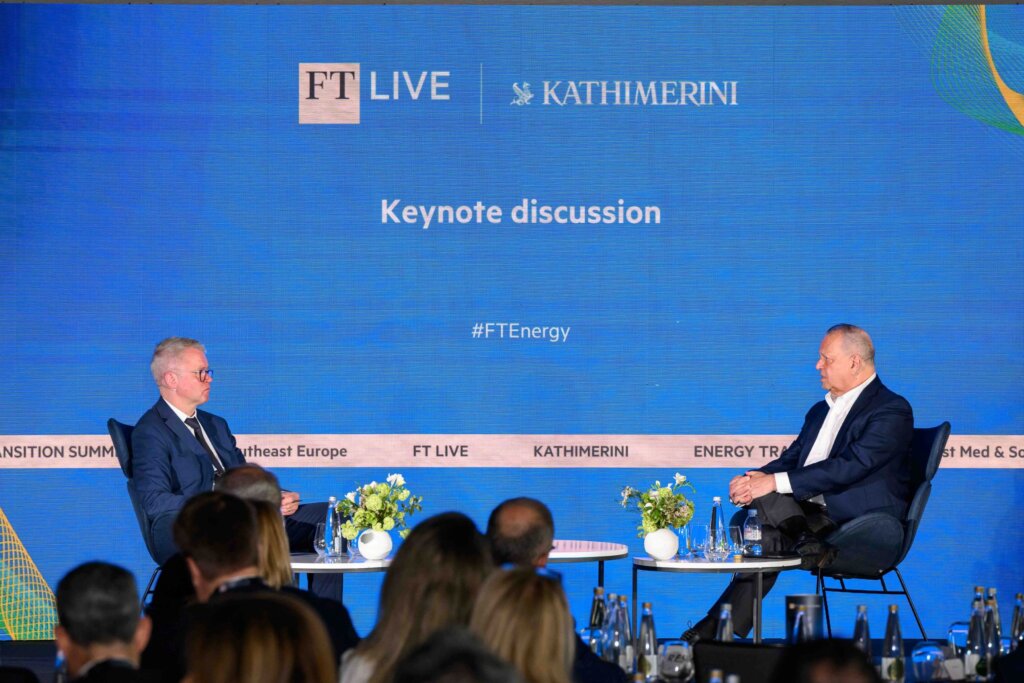
Regarding the need for energy storage development, he stressed: “During the daytime, with abundant solar generation, electricity can cost almost nothing. Until technology allows us to have batteries with six-, eight-, or ten-hour autonomy, we will continue to depend on fossil fuels for roughly half the day. This remains the greatest challenge of the energy transition.”
Referring to the trilateral cooperation between Greece, Cyprus, and Israel, Deputy Minister of Foreign Affairs Alexandra Papadopoulou stressed that “the goal is for it to serve as a good example of how we move forward together, how we face challenges together, and how we find solutions.” “There is enormous potential for continued cooperation in the field of security, in the economic sphere, at the business level, and particularly in infrastructure and energy,” she added.
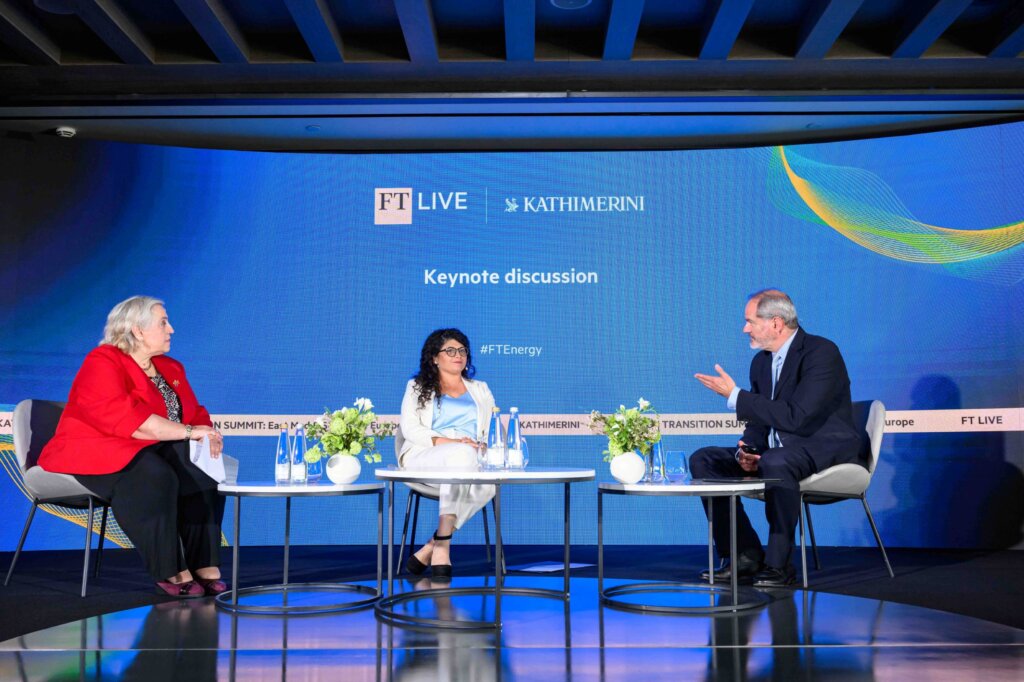
For her part, Israel’s Deputy Minister of Foreign Affairs, Sharren Haskel, pointed out that “there is no other country that is at war and yet continues to grow, whether in terms of GDP, investment, or the creation of new businesses. This happens because, during such challenges, we seek ways to turn them into opportunities.”
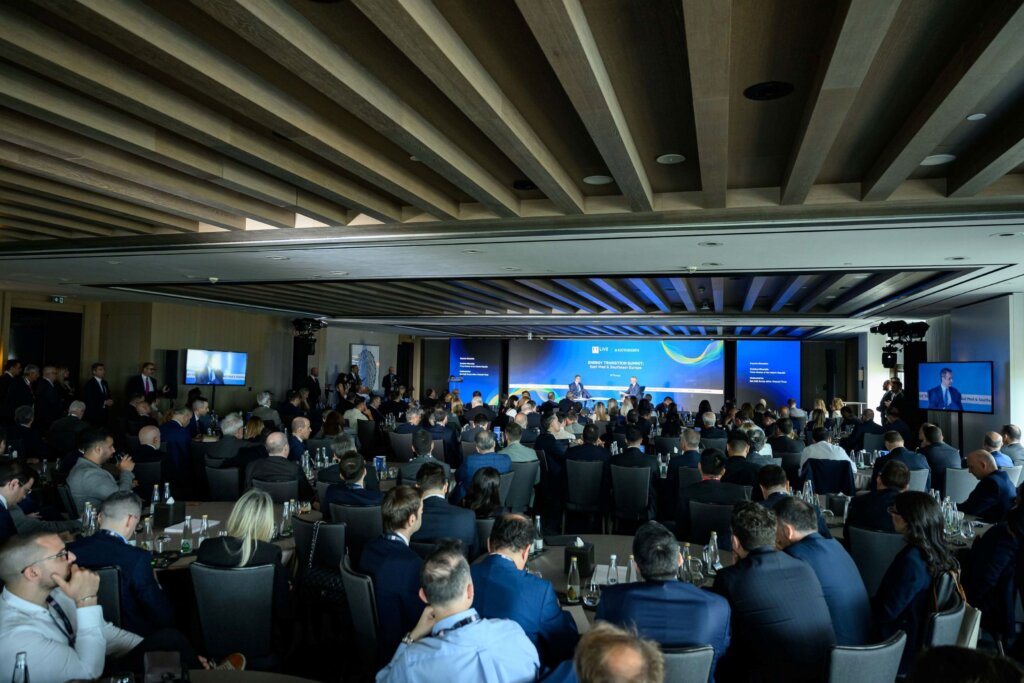
The Financial Times and Kathimerini Energy Transition Summit continues today with prominent speakers including the EU Special Representative for the Gulf region Luigi Di Maio, European Commissioner Apostolos Tzitzikostas, Minister of Foreign Affairs George Gerapetritis, Ministers of Energy and Finance from six countries of the Eastern Mediterranean and Southeastern Europe, Governor of the Bank of Greece Yannis Stournaras, and President of the Union of Greek Shipowners and Neptune Group of Companies, Melina Travlos.