

Energy geopolitics and the global economy at the center of the second day of the Financial Times “Energy Transition Summit”
International leaders and top representatives from the energy, finance, and shipping sectors discussed the new geopolitical and economic balances shaping the future of energy.
The Financial Times’ flagship “Energy Transition Summit,” organized in collaboration with Kathimerini, concluded successfully once again this year. On the second day of the conference, prominent speakers from Greece and abroad participated in discussions covering all major developments and pressing issues in the energy sector.
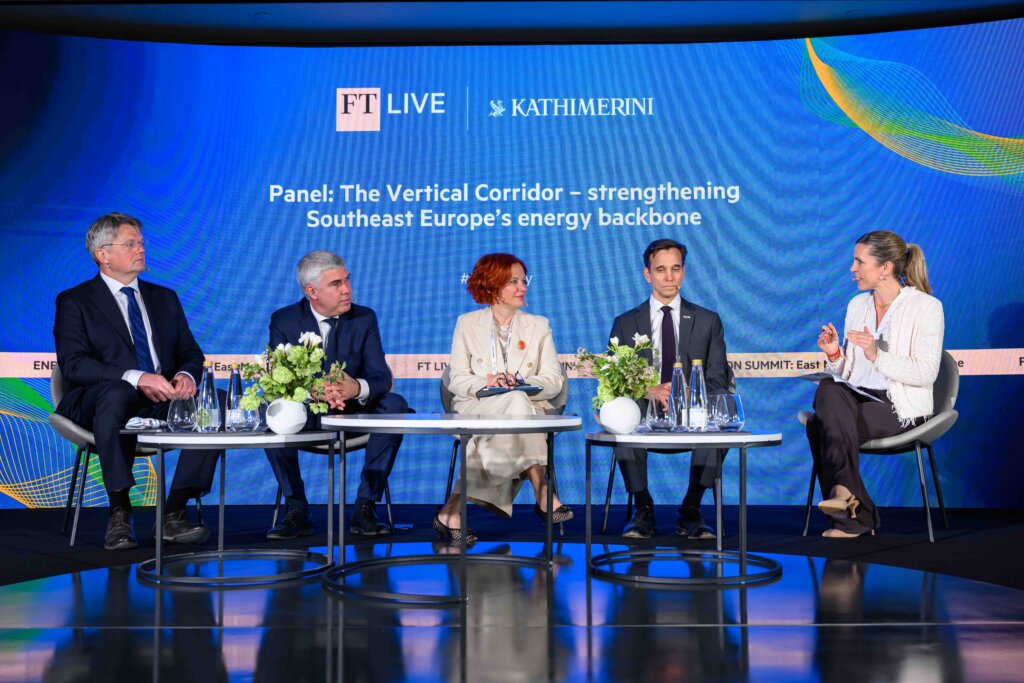
Vladimir Malinov, CEO, Bulgartransgaz
Maria Rita Galli, CEO, Aktor
Joshua Huck, Deputy Chief of Mission, U.S. Embassy in Athens
Eleni Varvitsiotis, Financial Times Journalist Financial Times – Kathimerini
Energy Transition Summit Southeast Europe Agenta 2026
The transformation of the Gulf Cooperation Council (GCC) countries from traditional hydrocarbon exporters into strategic investors in future energy systems, the delicate geopolitical balance between the West and China, and the urgent need to identify alternative corridors bypassing the Strait of Hormuz were at the center of the discussion between the GCC Secretary General, H.E. Jasem Mohamed AlBudaiwi, and Professor of International Relations and Kathimerini columnist Konstantinos Filis.
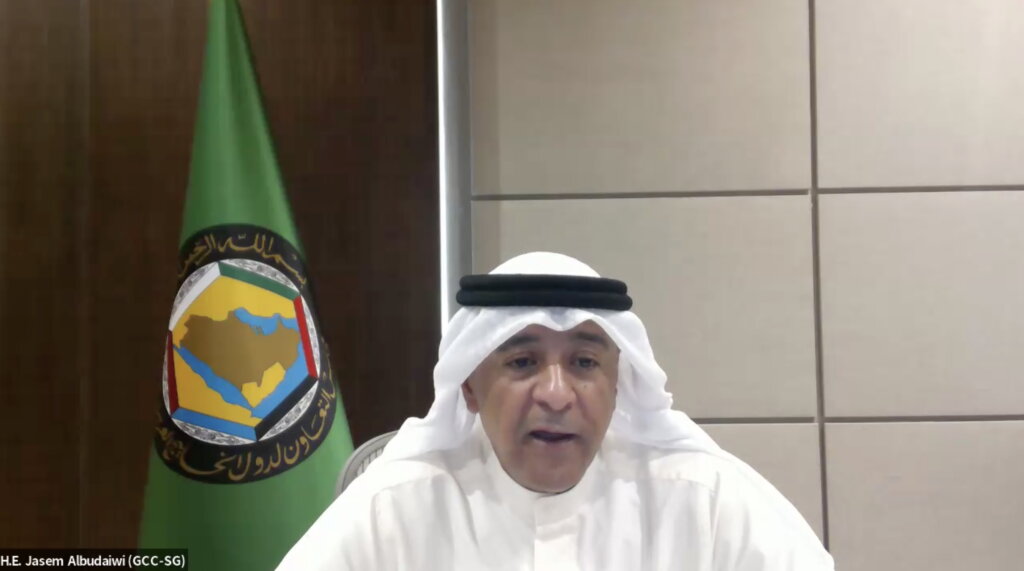
Responding to a question on whether the Gulf’s strategic importance is declining in a world moving toward decarbonization, the Secretary General was unequivocal: the region’s influence is not diminishing; rather, it is acquiring a more diversified and impactful role. GCC countries are investing heavily in three key pillars: solar and wind energy projects, clean hydrogen technologies, and carbon capture solutions, with planned investments in the energy sector estimated at €800 million over the coming years.
Asked by Mr. Filis how the GCC balances its relations between the United States and the increasingly influential China, Mr. AlBudaiwi stressed that Gulf states maintain strategic cooperation with the United States while also enjoying excellent relations with Beijing and Brussels. “We do not see this through the lens of competition, but of cooperation,” he stated.

Mariam Kvrivishvili, Minister of Economy and Sustainable Development of Georgia
Enea Karakaci, Minister of Infrastructure and Energy of Albania
Dubravka Dedovic Handanovic, Minister of Energy and Mining of Serbia
Dorin Junghietu, Minister of Energy of Moldova
Sanja Bozhinovska, Minister of Energy, Mining and Mineral Resources of North Macedonia
Athanasios Ellis, Director, KATHIMERINI English Edition Financial Times – Kathimerini
Energy Transition Summit Southeast Europe Agenta 2026
The need to deepen strategic cooperation and connectivity between the European Union and Gulf countries—not only in fossil fuels but also in renewable energy and transport corridors—was highlighted by the EU Special Representative for the Gulf, Luigi Di Maio.

Energy Transition Summit Southeast Europe Agenta 2026
He emphasized that the EU “immediately decided to stand by our friends and partners in the Gulf and the GCC countries,” initially through “a joint declaration by EU foreign ministers expressing our solidarity with our friends and partners and supporting their right to self-defense,” followed by visits to the Gulf by himself and other EU leaders. This effort, he continued, “constitutes a strong expression and an excellent opportunity to reinforce this cooperation.” Regarding the EU’s priorities for the security of energy flows, Mr. Di Maio stated that “immediately following a US-Iran agreement, the Strait of Hormuz must be safeguarded,” as, being a natural passage, “it cannot be subject to tolls or payments, and freedom of navigation must be ensured.”
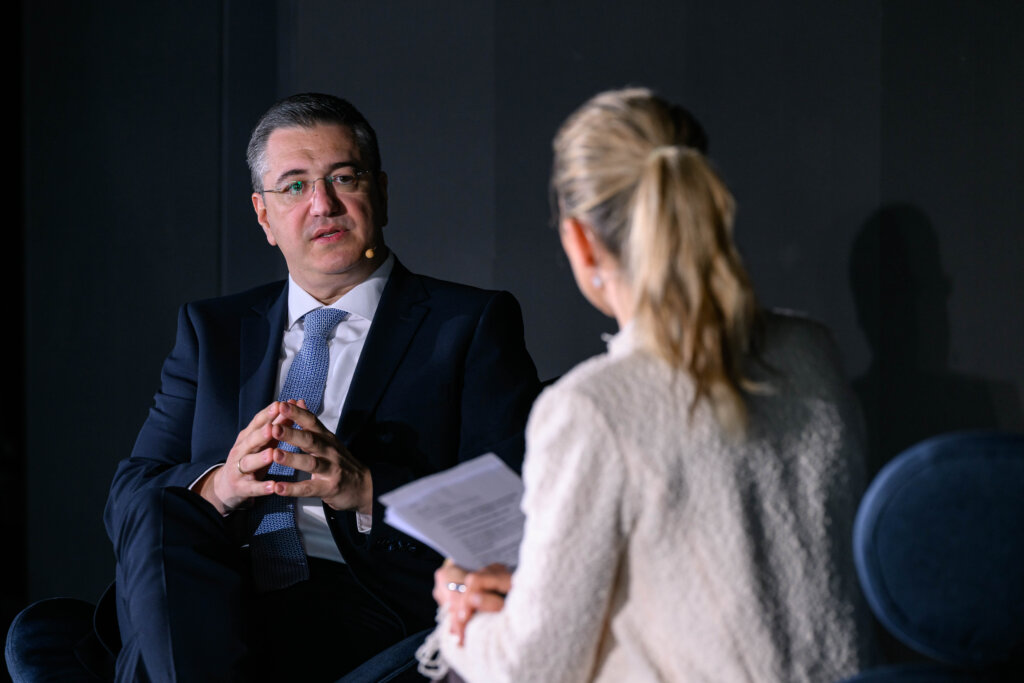
The European Commissioner for Sustainable Transport and Tourism, Apostolos Tzitzikostas, appeared reassuring regarding the adequacy of aviation fuel supplies in Europe, stressing that there are no indications Europe is at risk of shortages. “Citizens should not worry,” he said, noting that the EU maintains strategic emergency reserves that can be activated if necessary. He acknowledged, however, that the major challenge at present is soaring prices, which have more than doubled within two months, putting pressure on airlines and leading to route cancellations that are no longer considered economically viable.
Energy Transition Summit Southeast Europe Agenta 2026
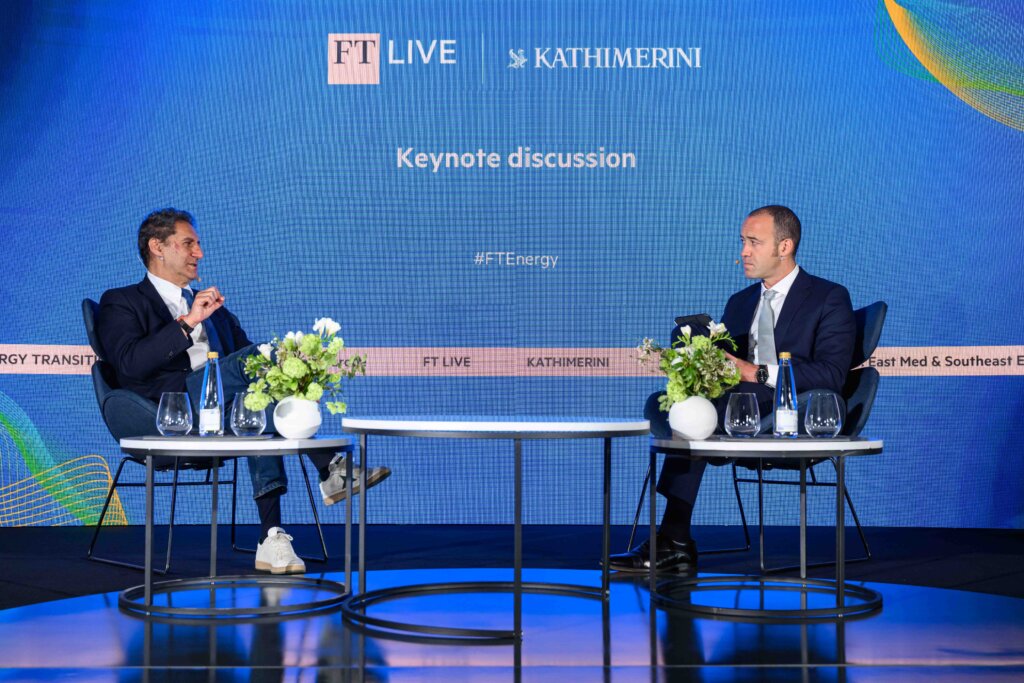
Energy generated from Renewable Energy Sources (RES), apart from being more environmentally friendly compared to fossil fuels, is also more competitive, said Francesco La Camera, Director-General of IRENA (International Renewable Energy Agency). At the same time, RES are “also more energy secure,” something evident in light of the wars in Ukraine and the Middle East: countries with a higher share of renewables in their energy mix are less affected by such developments, he noted. Spain, Denmark, and Norway, for example, enjoy lower electricity costs compared to other countries.
Energy Transition Summit Southeast Europe Agenta 2026
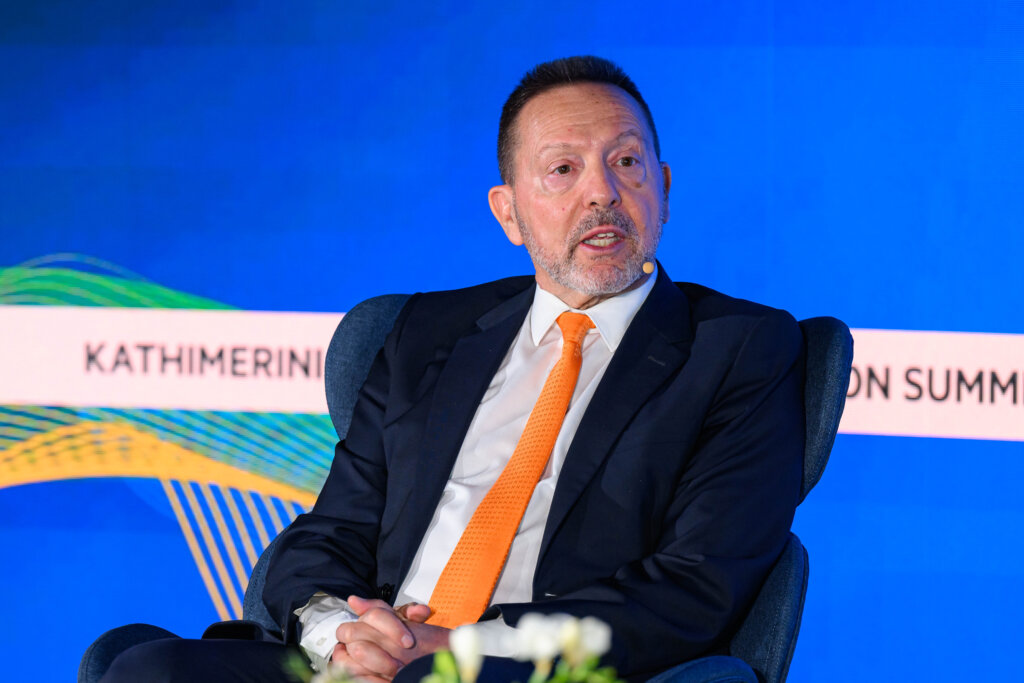
The Governor of the Bank of Greece, Yannis Stournaras, announced an increase in European Central Bank interest rates in June, while also leaving open the possibility of further hikes should inflationary pressures in the economy remain strong and persistent.
As he noted, everything depends on when the Strait of Hormuz reopens. If oil prices remain at current levels (USD 105 per barrel), the European economy will move between the European Central Bank’s adverse and severely adverse scenarios. “I hope this does not happen, because if it continues, then as the European Central Bank we will have no option but to raise interest rates. None of us wants this,” he said, adding that such a development would slow economic growth in addition to increasing inflation. If inflation rises only slightly, “we will proceed with a small increase in interest rates.” However, if inflation rises significantly and persists over a long period, “I fear we will enter a different situation,” he warned.
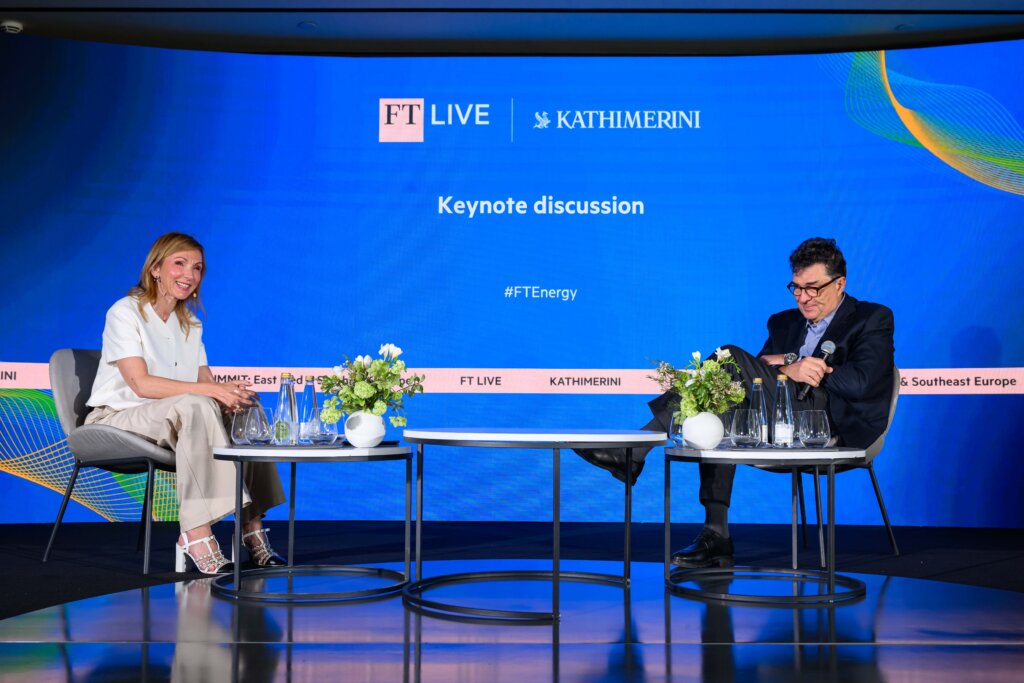
The transformation of shipping into a major arena of geopolitical competition, as well as the significant challenges the sector faces on the road to decarbonization, were highlighted by the President of the Union of Greek Shipowners, Melina Travlos, during her discussion with Kathimerini Executive Editor Alexis Papachelas. “What is unprecedented is that shipping has now been instrumentalized in geopolitical and highly political crises, and has also been unfairly targeted,” she said, while noting that the current crisis has also given the sector greater visibility within international decision-making centers.
Energy Transition Summit Southeast Europe Agenta 2026
Closing the second day of the conference, Financial Times journalist Simon Mundy announced that the conference will return to Athens for a third consecutive year in collaboration with Kathimerini in 2027.
Energy Transition Summit Southeast Europe Agenta 2026
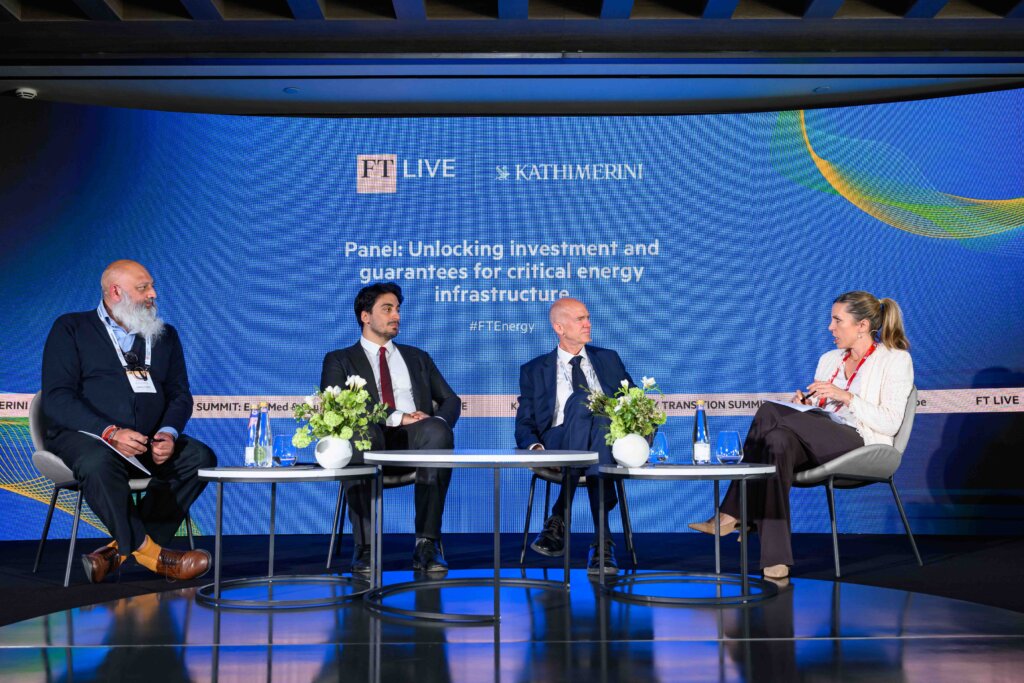
Federico Lazzari, Head of the Brussels Representation Office of Glavbolgarstroy
Andreas Papandreou, Professor of Environmental Economics, NKUA
Eleni Varvitsiotis, Financial Times Journalist Financial Times – Kathimerini
Energy Transition Summit Southeast Europe Agenta 2026