

“Helping Homes” project results presented in Mouzaki, Karditsa: building Climate-Resilient Homes
The results of the field research and policy recommendations of the “Helping Homes Become Resilient in Climate-Affected Greece” project were presented today, Thursday, 2 July 2026, at the Municipal Council Hall of Mouzaki Town Hall. The project is implemented by INZEB with co-funding from the European Climate Foundation.
The event focused on the key findings of field research conducted in disaster-affected areas of Thessaly and Crete, as well as on residents’ experiences following the devastating Storm Daniel floods and the Arkalochori earthquake, respectively. The project aim to generate evidence-based knowledge that will support the design of more effective, coherent, and people-centered public policies for climate resilience, energy-efficient housing upgrades, and the protection of Greece’s residential building stock.
A particularly moving moment of the event was the screening of testimonies from residents of the affected areas, highlighting the real-life impacts that extreme weather events have on people’s daily lives.
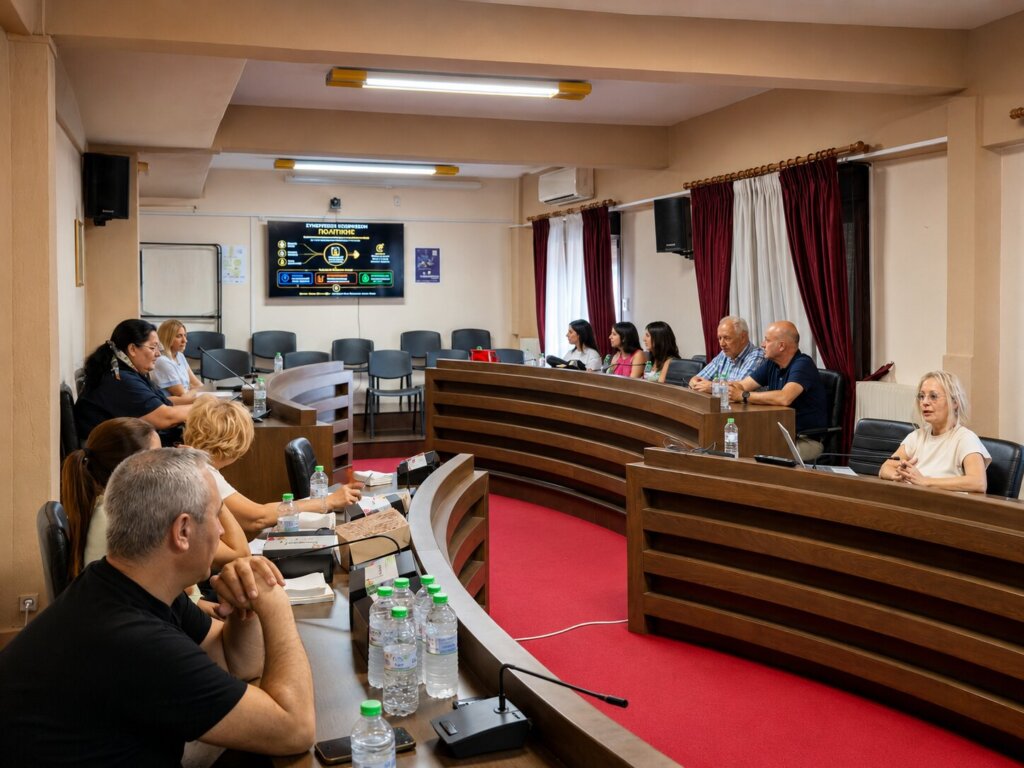
The event was opened by Mr. Nikos Poupis, Deputy Mayor for Civil Protection of Mouzaki, who stated:
“Today’s presentation at our Town Hall addresses the very heart of the challenges our local community continues to face following the devastating floods. Resilience cannot be built through engineering projects alone; it also requires a deep understanding of the needs of the people who lost their homes. As the Municipal Authority, we support initiatives such as the one by INZEB, which transform the suffering and experiences of our fellow citizens into concrete policy recommendations for the State, aiming to create safer and more resilient homes.”
Key Findings of the Field Research
The research, conducted in disaster-affected areas of both Thessaly and Arkalochori, Crete, revealed common patterns in the social, psychological, and housing impacts of natural disasters, regardless of whether they were caused by floods or earthquakes. Among the most significant findings are:
- Loss of Housing and Psychosocial Impacts: The loss of one’s home emerged as a central factor disrupting both daily life and psychological well-being, significantly affecting residents’ sense of security and life continuity.
- The Effects of Prolonged Temporary Housing: Extended stays in temporary accommodation—including hosted living arrangements, temporary housing units, or partially damaged homes—gradually weaken community resilience. Younger residents show an increasing tendency to relocate to urban areas, while older residents show an increasing tendency of abandonment and uncertainty about the future.
- Changing Housing Priorities: The research identified a significant shift in public attitutes. Whereas large homes were once associated with social status, people now increasingly prioritize smaller, safer, and more climate-resilient homes.
- Need for Long-Term Mental Health Support: Fear remains the dominant emotion among residents even years after the disaster, highlighting the need for sustained psychological support to facilitate long-term community recovery.
The research findings confirm that post-disaster recovery should go beyond financial compensation for damages and instead promote the creation of homes and communities that are better equipped to withstand the growing impacts of the climate crisis.
As Alice Korovesi, Chief Executive Officer of INZEB, noted:
“Behind every research finding lies a human story. Our objective was not only to document the impacts of extreme natural events, but also to understand how people experience loss, insecurity, and the effort to rebuild their everyday lives. Their experiences provide invaluable knowledge for designing effective public policies. We hope that the findings and recommendations of this research will make a meaningful contribution to strengthening prevention, emergency response, and recovery efforts, always placing citizens’ real needs and the resilience of local communities at the center.”
Policy Recommendations for the Future
The event also presented a comprehensive framework of policy recommendations covering the entire disaster management cycle—from prevention and preparedness to recovery and reconstruction—with the aim of creating a fairer and more effective system for protecting households.
The event concluded with an open discussion during which citizens, representatives of public and private organizations, and local government officials exchanged views on the next steps for strengthening the resilience of the Mouzaki area and the wider Thessaly region.